
Black Beaver, Harbinger of the Chisholm Trail
Posted on November 11, 2014 Leave a Comment
by Paul L Bennett
But for the loyal courage of a 55-year-old Delaware Indian guide, there might never have been a Chisholm Trail. And carrying “maybe’s” just a step further, Oklahoma could have been permanently lost to the union in 1861.
Deep in Confederate territory and surrounded on all sides, Col. William H. Emory abandoned Fort Washita with his 400 Union troops on April 16, 1861. Marching toward Fort Cobb, he captured an advance guard of Texas Confederates, but this was a small consolation for a commander whose near impossible problem still lay ahead and unsolved. Arriving at Fort Cobb, Emery found other troops and civilian refugees that swelled his cavalcade to more than 600. The established routes through the “nations” That led northward to Union territory were straddled by Indian allies of the south.
Here entered Black Beaver (Se-Ket-Tu-Ma-Quah), already known as America’s most reliable Indian guide and western explorer. Seven times he had seen the Pacific. For a decade he had been a trusted employee of the American Fur company in the Pacific Northwest. But by 1853 his days of association with Audubon, Dodge, Marcy and Fremont were behind him. The California Trail over which he had guided Marcy and his first expedition in 1849 now carried thousands of migrants yearly, many of them passed near Black Beavers’s prosperous farm at Fort Arbuckle.
Captain Black Beaver
Posted on July 3, 2014 2 Comments
by Kerry Holton
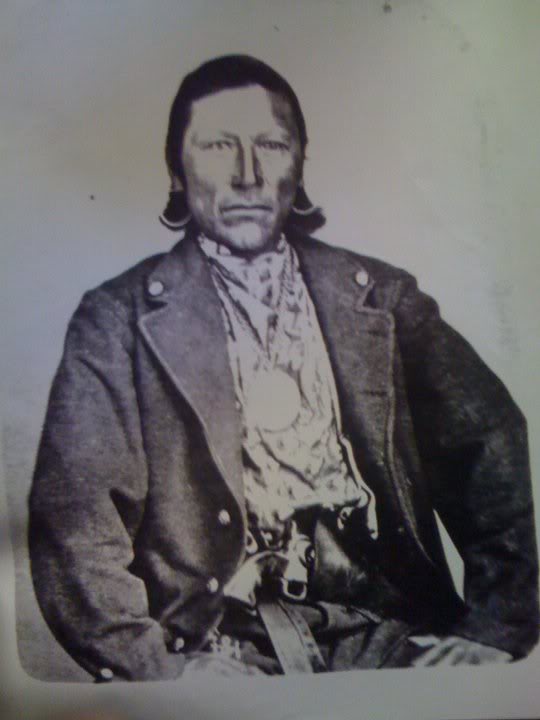
Captain Black Beaver with the Lincoln Peace medal.
 Black Beaver
Recent Comments